

ATEX GUIDELINES
Directive 2014/34/EU of the European Parliament and of the Council, of 26 February 2014, regulates the harmonization of the laws of the Member States relating to equipment and protective systems intended for use in potentially explosive atmospheres.
What is a potentially explosive atmosphere?
It means a mixture with air, under atmospheric conditions, of flammable substances in the form of gases, vapours, mists or dusts in which, after potential ignition has occurred, combustion spreads to the entire unburned mixture.
What are the zones and how are they classified?
Every company must classify in ATEX zones the areas where explosive atmospheres may form and where special precautions need to be taken to protect the safety and health of workers. Aspects to be considered: the type of substance causing the explosive atmosphere, the frequency with which it occurs and its duration.
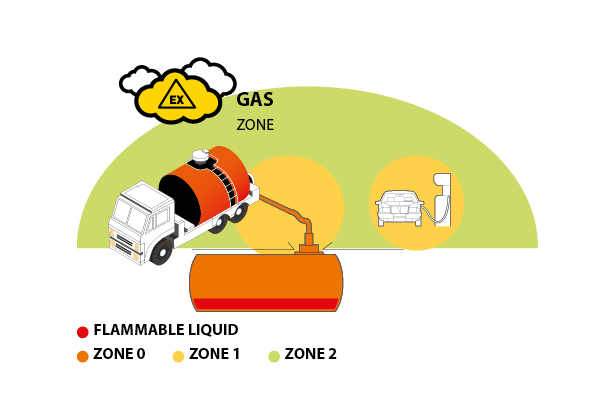
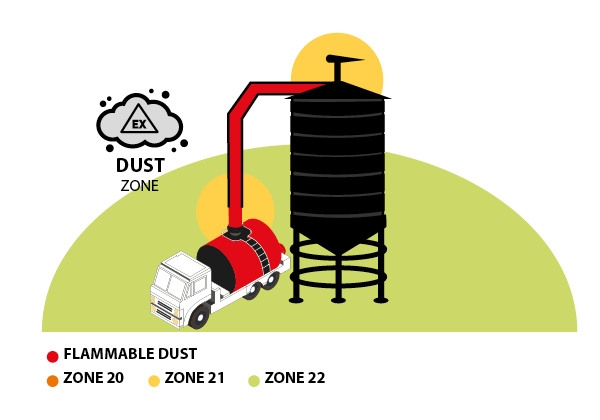
In what environments can we find a potentially explosive atmosphere?
A potentially explosive atmosphere is likely to exist in a wide range of environments, from domestic to industrial. However, those in which there is a greater probability due to the existence of flammable substances and the handling of hazardous materials are:
- Chemical industry
- Oil and natural gas extraction
- Petrol station
- Offshore
- Marine sector
- Tank vehicle
- Shipyard
- Power plant
- Refinery
- Rescue service
- Aviation
- Sugar refinery
- Grain and feed industry
- Fertilizer industry
- Flour milling
- Pharmaceutical industry
- Waste treatment plant
- Timber industry